How to Invest $55,000 for Early Retirement
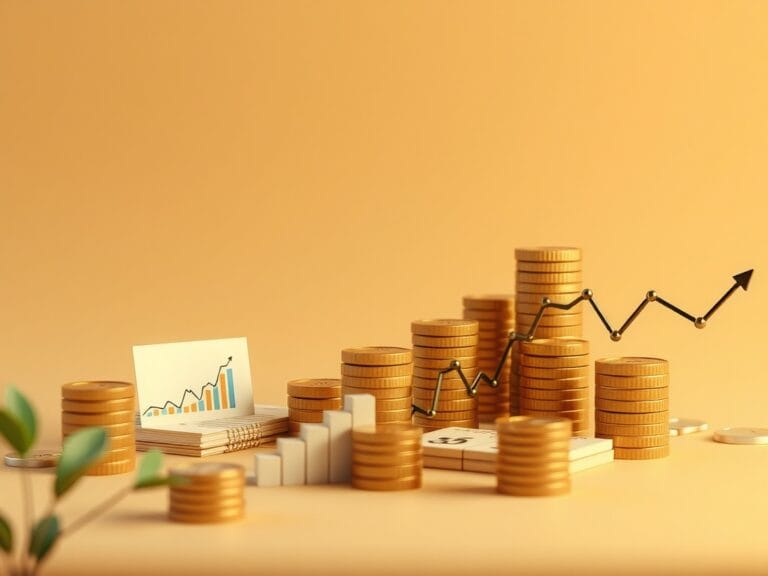
If you have $55,000 to invest for early retirement, you already have a powerful head start. At a 7% average annual return, that lump sum could grow to about $108,000 in 10 years, $213,000 in 20 years, and roughly $420,000 in 30 years without adding another dollar.
The real advantage is not just the starting amount — it is the time you give it to compound. If you want to stress-test different scenarios, you can also compare outcomes with the Compound Interest Calculator and the Investment Return Calculator before choosing an allocation.
Why $55,000 matters
A single $55,000 investment can do the work of years of small deposits, especially when you keep fees low and stay invested through market cycles. The biggest mistake is leaving a large sum idle in cash for too long.
Why You Should Invest $55,000 Instead of Saving It
Saving money is useful for short-term goals and emergency reserves, but cash typically loses purchasing power over time. In 2025, high-yield savings accounts often pay around 4.0% to 4.5% APY, while many online savings accounts sit closer to 3.5% to 4.0% APY. By contrast, a diversified stock portfolio has historically aimed for a much higher long-term return, though with ups and downs along the way.
That difference becomes meaningful over time. If $55,000 earns 4.0% in savings, it grows to about $81,500 in 10 years, $121,000 in 20 years, and $180,000 in 30 years. If the same $55,000 is invested at 7.0%, it grows to about $108,000 in 10 years, $213,000 in 20 years, and $420,000 in 30 years. That is a difference of roughly $26,500 after 10 years, $92,000 after 20 years, and $240,000 after 30 years.
Inflation also matters. If inflation averages 2.5% to 3.0%, cash returns can be partly offset by rising costs. The U.S. Bureau of Labor Statistics and the Federal Reserve both emphasize that inflation erodes purchasing power over time, which is why long-term goals usually need growth assets. You can estimate the real impact with the Inflation Calculator.
Saving is not the same as investing
A savings account protects principal, but it rarely builds the kind of wealth needed for early retirement. If your time horizon is 10+ years, keeping the full $55,000 in cash can cost you six figures in lost growth.
For a retirement-focused goal, the question is not whether investing is risk-free — it is whether staying in cash is too risky because of lost compounding. The answer is often yes.
7 Best Ways to Invest $55,000
There is no single correct answer for every investor. The best mix depends on your time horizon, tax situation, and how much volatility you can tolerate while pursuing early retirement.
1. Low-Cost Total Stock Market ETF
A total market ETF such as VTI gives you exposure to the U.S. stock market in one fund. The expense ratio is typically around 0.03%, which keeps costs extremely low. Most brokerages let you buy ETF shares with no commission, and the minimum investment is usually the price of one share.
Expected long-term returns are often modeled around 7% to 10% annually before inflation, though actual results vary. The main advantage is broad diversification across large-, mid-, and small-cap companies. The downside is market volatility; a 20% to 30% drawdown can happen in a bad year.
This is a strong core holding for investors who want simplicity and growth. It pairs well with retirement accounts and taxable accounts alike.
2. S&P 500 ETF
An ETF like VOO tracks the S&P 500 and offers exposure to 500 of the largest U.S. companies. Its expense ratio is also around 0.03%, and the minimum purchase is one share. Historically, large-cap U.S. stocks have been a reliable engine of long-term growth, though they are still market-risk assets.
The expected return is often similar to a broad equity portfolio, but the concentration in large companies makes it slightly less diversified than total market funds. The upside is simplicity and strong historical performance. The downside is less exposure to smaller firms and international markets.
For many early-retirement investors, VOO can be a core equity holding, especially if paired with international funds.
3. Total International Stock ETF
Funds such as VXUS or similar international ETFs provide exposure outside the U.S. The expense ratio is commonly around 0.05% to 0.07%, and minimums are usually one share. International diversification can help reduce country-specific risk and improve balance across global markets.
Expected returns are less predictable than U.S. stocks, but the long-term role is diversification rather than maximum short-term performance. The main benefit is reduced reliance on a single economy. The main drawback is that foreign markets can underperform for long stretches.
If your retirement plan depends heavily on U.S. stocks alone, adding international exposure can make the portfolio more resilient.
4. Bond ETF for Stability
Bond ETFs such as BND or AGG are designed to reduce volatility and provide income. Expense ratios are generally around 0.03% to 0.05%. Minimums are again usually one share, making them accessible to nearly all investors.
Expected returns are typically lower than stocks, often in the 3% to 5% range over time, depending on interest rates and bond duration. Bonds help smooth the ride during equity downturns, which can matter a lot when you are near retirement or want to avoid panic selling.
The tradeoff is lower growth. If your retirement date is far away, too many bonds can slow your progress toward financial independence.
5. Target-Date Retirement Fund
A target-date fund is an all-in-one option that automatically adjusts from growth to more conservative assets over time. Many major providers, including Vanguard, Fidelity, and Schwab, offer these funds with expense ratios often between 0.08% and 0.15%. Minimums vary by provider, but many are accessible through retirement accounts with low starting balances.
These funds are excellent for investors who want a set-it-and-forget-it approach. They provide instant diversification and automatic rebalancing. The downside is less control over asset allocation and potentially slightly higher fees than building a portfolio yourself.
If you want simplicity and discipline, this can be one of the easiest ways to invest $55,000 for early retirement.
6. Dividend Growth ETF
Dividend-focused ETFs such as VIG or SCHD emphasize companies with a history of growing payouts. Expense ratios are commonly around 0.06% to 0.08%. Minimums are usually one share, and the funds can be held in taxable accounts or retirement accounts.
Expected total returns can still be competitive with the broader market, but the appeal is a combination of income and growth. The drawback is sector concentration and the risk of chasing yield instead of total return. Dividends also create tax consequences in taxable accounts.
If you want a portfolio that produces visible cash flow while still growing, dividend ETFs can play a supporting role.
7. Cash Plus Short-Term Treasuries
For investors who are close to early retirement, a portion of the $55,000 can be held in a high-yield savings account or short-term Treasury fund. U.S. Treasury yields in 2025 have often been in the mid-4% range for short maturities, and Treasury bills can be a useful parking place for money you may need within 1 to 3 years. Treasury ETFs usually carry low expense ratios, often around 0.03% to 0.15%.
This option is not ideal for long-term growth, but it is useful for sequence-of-returns risk management. If you plan to retire soon, having two to three years of spending needs in safer assets can reduce pressure during a market downturn.
The downside is opportunity cost. Money held too conservatively may fail to keep pace with inflation over long horizons.
Model Your Growth Before You Invest
See how $55,000 could compound at different return assumptions before choosing your allocation.
How to Choose the Right Option
The best way to invest $55,000 for early retirement depends on three main factors: time horizon, risk tolerance, and tax placement. A younger investor with 15 to 25 years before retirement can usually lean more heavily into stocks. Someone within 5 years of retiring may need a more balanced mix of stocks, bonds, and cash reserves.
Use your time horizon first
If you have 15+ years, a stock-heavy allocation such as 80% to 100% equities may make sense. If you have 5 to 10 years, a balanced portfolio with 60% to 80% equities is often more practical. If you are within 5 years of early retirement, preserving capital becomes more important, and a larger bond or cash allocation can reduce stress.
Match risk to your behavior, not just your math
Some investors can tolerate a 30% decline without selling. Others panic at a 10% drop. If a portfolio loss would cause you to abandon your plan, it is too aggressive. The best portfolio is the one you can hold through a bear market.
Place assets in the right account
Taxable accounts are usually better for tax-efficient ETFs, especially broad-market index funds with low turnover. Retirement accounts like IRAs or 401(k)s can be better for bond funds and higher-income-producing assets because they shelter interest and dividends from annual taxes. If you are deciding how to split funds, a Retirement Calculator can help you estimate whether your current savings rate supports early retirement.
Simple framework
A common early-retirement structure is: broad stock ETFs for growth, bond ETFs for stability, and cash or Treasuries for near-term spending needs. Keep costs low and avoid overcomplicating the portfolio.
If you want a simpler decision rule, ask: “When do I need this money, and how much volatility can I withstand without changing course?” That answer usually points to the right mix.
The Power of Consistency
Investing $55,000 is strong, but consistency can make it much more powerful. If you add monthly contributions after the initial lump sum, your retirement timeline can improve dramatically. For example, investing an extra $500 per month at a 7% return can add more than $180,000 over 20 years.
Using a Savings Goal Calculator or the ROI Calculator can help you map the gap between where you are and where you want to be. The goal is not just to invest once — it is to create a repeatable habit that keeps working for decades.
Milestone table: $55,000 plus monthly investing
Assuming a 7% annual return and no withdrawals, here is what the account could look like if you start with $55,000 and add $1,000 per month:
- 5 years: about $140,000
- 10 years: about $244,000
- 15 years: about $380,000
- 20 years: about $557,000
If you wait 5 years to start, you lose the growth on the first five years of compounding. In this example, delaying by 5 years can cost roughly $40,000 to $50,000 in potential portfolio value, depending on market returns and contribution timing.
Waiting is expensive
Even if you are unsure about the perfect allocation, starting with a reasonable plan is usually better than waiting for perfect market conditions. Time in the market is one of the most important drivers of early-retirement success.
Common Mistakes to Avoid
1. Keeping the full $55,000 in cash too long
This is one of the most expensive mistakes. If the money earns 4% in cash but could earn 7% in a diversified portfolio, the difference on $55,000 can exceed $90,000 over 20 years. Cash is valuable for emergencies, but not as a long-term retirement engine.
2. Chasing the hottest stock or sector
Putting the entire amount into a single stock or trend can create extreme concentration risk. A 50% drop on $55,000 is a $27,500 loss, and recovery may take years. Broad funds like VTI or VOO are usually safer starting points than speculative bets.
3. Ignoring taxes
High-dividend or high-turnover investments in a taxable account can create annual tax drag. Even a 0.5% to 1.0% tax drag can materially reduce long-term compounding. Tax efficiency matters more as your balance grows.
4. Overpaying in fees
A fund with a 1.00% expense ratio can cost you thousands over time compared with a 0.03% index fund. On $55,000, the fee difference compounds year after year. Low-cost funds often give you a better chance of keeping more of your return.
5. Investing without a withdrawal plan
Early retirement is not just about accumulation; it is also about spending safely. If you do not plan how to withdraw funds, you may sell at the wrong time. Review your spending strategy before retirement begins, not after.
Frequently Asked Questions
How much could $55,000 be worth in 20 years?
At 4% in savings, about $121,000. At 7% invested, about $213,000. That is an approximate difference of $92,000 before taxes and fees.
Is it better to invest $55,000 all at once or over time?
Historically, lump-sum investing has often outperformed dollar-cost averaging because markets tend to rise over time. If you are nervous, you could invest the money in 3 to 6 monthly tranches, but waiting too long can reduce expected returns.
What is a reasonable expense ratio for a long-term ETF?
For broad index ETFs, anything below 0.10% is generally very competitive. Funds like VTI and VOO are around 0.03%, which is excellent for long-term investors.
How much monthly investing would help me retire earlier?
Adding $500 per month to a $55,000 portfolio at 7% could grow to roughly $244,000 in 10 years and $557,000 in 20 years. A higher contribution, such as $1,000 per month, accelerates the result dramatically.
Should I use retirement accounts or taxable accounts?
If you have tax-advantaged space in an IRA or 401(k), use it first for tax efficiency. Taxable accounts are still useful, especially for low-cost ETFs and money you may need before age 59½.
If you want to explore a retirement target more precisely, the Retirement Calculator can help you estimate whether $55,000 is enough to support your early retirement plan alongside future contributions.
Check Your Retirement Gap
Estimate how far $55,000 can take you and what monthly investing may still be needed.
External references: U.S. Securities and Exchange Commission investor guidance on diversification and fees, the Federal Reserve’s interest rate data, and the U.S. Bureau of Labor Statistics inflation data all support the case for low-cost, diversified, long-term investing.
Disclaimer: This article is for educational purposes only and does not constitute financial, tax, or investment advice. Investing involves risk, including possible loss of principal. Past performance does not guarantee future results. Consider your objectives, time horizon, risk tolerance, and tax situation before investing, and consult a qualified professional if needed.
Last updated: September 5, 2026
Educational notice: This article is for educational purposes only and is not investment, tax, or legal advice. Read the full disclaimer.